Emotion Task Description:
During each in-person session, subjects completed a fMRI “Emotion Task”.
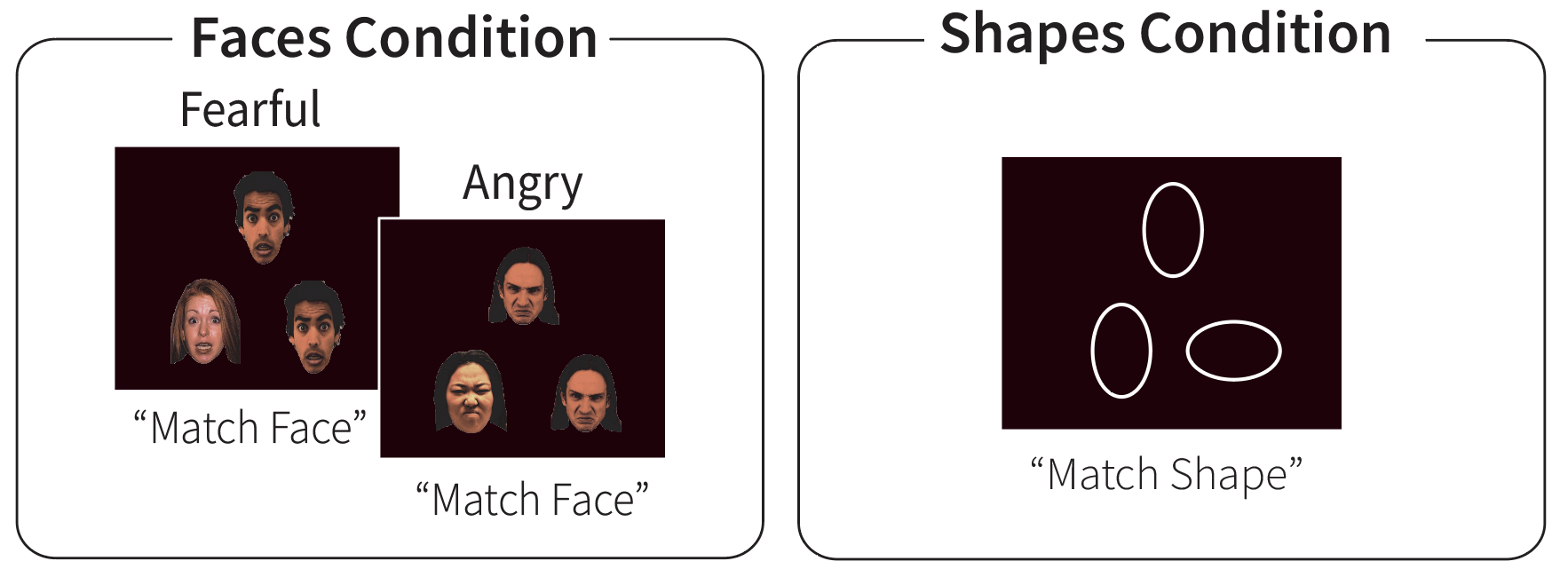
During the Emotion task, participants see three images (either 3 emotional faces or 3 shapes), one at the top and two at the bottom of the display. The face stimuli include angry or fearful expressions, that been adapted from the original version of the task (Hariri, 2002) to include more ethnically diverse faces. Participants are instructed to press the left button if the left-hand image on the bottom of the screen matches the top image, and to press the right button if the right-hand image on the bottom of the screen matches the top image. The bottom of the screen shows button mappings to reduce working memory demands for young children (Somerville et al., 2018).
Video Example:
Task Design:
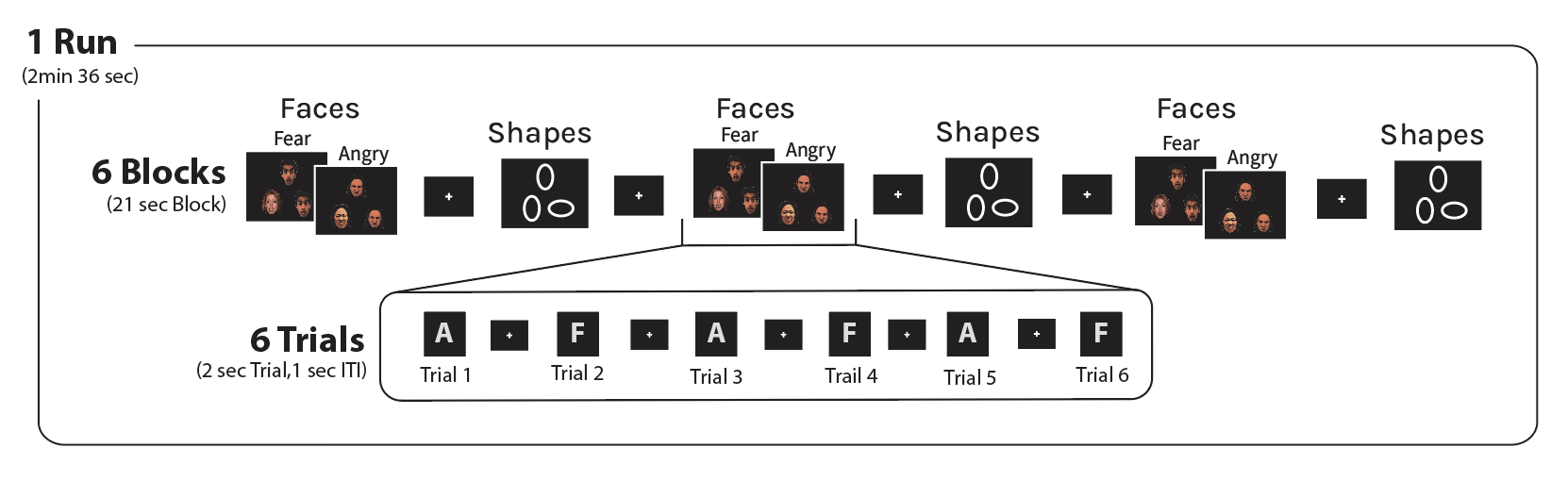
Sujects competed a single run consisting of 6 blocks (3 blocks of shape-matching and 3 blocks of face-matching). Shapes and Faces blocks are interleaved. Each block begins with a cue instructing participants to either “Match Shapes” or “Match Faces” and each block consisted of 6 trials (2 sec per trial). 3 angry and 3 fearful face trials were presented in each block. The order of the trials was randomized within each block.